Geotechnical investigation in Colorado Springs forms the critical foundation for safe, compliant, and cost-effective construction across the Pikes Peak region. This category encompasses the systematic evaluation of subsurface soil, rock, and groundwater conditions to inform foundation design, earthwork, slope stability, and environmental assessments. In a city where expansive claystone, collapsible soils, and shallow bedrock are common, skipping or minimizing investigation can lead to structural distress, litigation, and costly repairs. A properly scoped investigation identifies hazards early, allowing engineers to tailor solutions to site-specific conditions rather than relying on conservative assumptions that inflate budgets.
Colorado Springs sits at the boundary between the Great Plains and the Southern Rocky Mountains, creating a complex geological mosaic shaped by uplift, erosion, and alluvial deposition. The Pierre Shale and Denver Basin formations underlie much of the area, often mantled by Pleistocene terrace gravels, wind-blown loess, and landslide debris along the foothills. Expansive claystone of the Pierre Shale presents significant volume-change potential with moisture fluctuations, while collapsible loessial soils can rapidly settle when wetted. Additionally, steep drainages and old landslide complexes near areas like Cheyenne Cañon and North Cheyenne Cañon Park demand rigorous slope stability analysis. Groundwater levels vary seasonally and can be perched above bedrock, complicating excavations and basement construction.
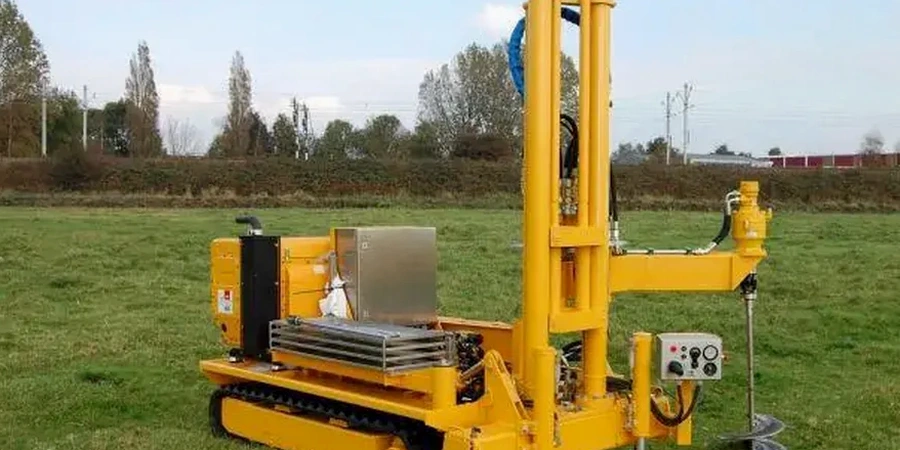
Site investigation in Colorado Springs is governed primarily by the International Building Code as adopted by the City of Colorado Springs, with amendments in the Pikes Peak Regional Building Code. These codes mandate geotechnical reports for most commercial, multi-family, and public works projects, specifying minimum boring depths, sampling intervals, and laboratory testing protocols. The Colorado Geological Survey provides supplementary guidance on geologic hazards, including swelling soils, radon potential, and seismic considerations. For hillside developments, the city's Hillside Overlay Ordinance triggers additional requirements for slope stability analysis and drainage evaluation. Compliance with these local standards is non-negotiable for permit approval and long-term liability protection.
Nearly every construction project in Colorado Springs benefits from some level of subsurface investigation. Custom homes on sloping lots and large commercial developments alike require data on bearing capacity and settlement. Schools, hospitals, and emergency response facilities demand enhanced seismic site classification per IBC Chapter 16. Roadway and utility projects need information on trench stability and pipe bedding, while retaining walls exceeding four feet typically require geotechnical input. Even smaller additions and accessory dwelling units can trigger investigation requirements when located on suspect soils. A popular in-situ testing method employed during these investigations is the Cone Penetration Test, which provides continuous profiling of soil behavior without the disturbance associated with traditional drilling. For deeper exploration or rock coring, standard penetration test borings complement CPT data. The CPT is particularly valuable in the loose alluvial deposits along Fountain Creek and in characterizing tailings or fill materials.
Available services
Quick answers
When is a geotechnical investigation required for a project in Colorado Springs?
The Pikes Peak Regional Building Code requires a geotechnical report for most commercial, multi-family, and public works projects. Single-family homes on flat lots may not trigger a mandatory report, but lenders often require one. Hillside developments, projects in mapped geologic hazard zones, and structures exceeding certain heights or loads always need investigation. The building official has discretion to require one if soil conditions are suspect.
What are the most common soil-related problems in Colorado Springs?
Expansive claystone of the Pierre Shale is the most widespread issue, swelling when wet and shrinking during dry periods, which can crack foundations and slabs. Collapsible loessial soils along the eastern plains settle rapidly upon wetting. Landslide-prone colluvium in foothill areas, shallow bedrock that complicates excavation, and locally high groundwater also pose significant engineering challenges requiring specialized mitigation.
How deep should geotechnical borings go for a typical project?
Boring depth depends on foundation type, loads, and subsurface conditions. The IBC generally requires borings to extend below the depth of significant stress influence, typically 1.5 to 2 times the footing width. For shallow foundations on expansive soils, borings often extend 15 to 30 feet. Deep foundations like drilled piers may require borings 40 to 60 feet deep or into competent bedrock, whichever is deeper.
What laboratory tests are typically included in a Colorado Springs geotechnical investigation?
Standard testing includes moisture content, Atterberg limits to evaluate plasticity and expansion potential, unconfined compressive strength for claystone, and consolidation tests for settlement analysis. Swell-consolidation tests on Pierre Shale samples are critical. For granular soils, sieve analysis and direct shear tests may be performed. Chemical testing for sulfate and chloride content is common when concrete durability is a concern.