Colorado Springs sits at the foot of Pikes Peak, where the ground shifts from decomposed granite to swelling clay without warning. This geological variability demands a foundation system that reaches beyond the active soil zone. Pile foundation design here is not a generic exercise. It requires precise load transfer to competent bearing strata, often found 15 to 40 feet below grade. The freeze-thaw cycles at this elevation accelerate near-surface soil movement, making shallow footings a recurring liability in the region. We combine site-specific geotechnical data with in-situ permeability measurements to assess drainage conditions that affect pile skin friction, and we rely on triaxial testing to define the drained strength parameters of the local decomposed granite for accurate shaft capacity calculations.
A pile is only as reliable as the soil data behind it. In Colorado Springs, ignoring decomposed granite variability is the fastest path to a change order.
Technical details of the service in Colorado Springs
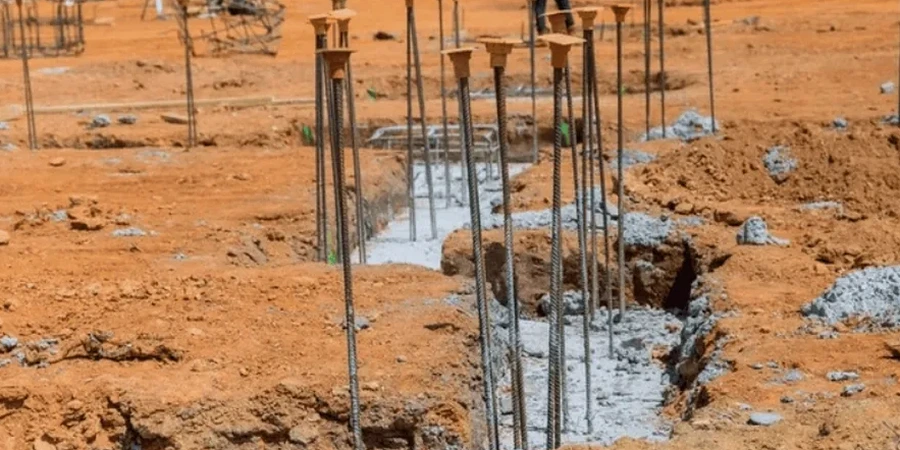
Risks and considerations in Colorado Springs
The Dawson and Denver Formations underlie much of Colorado Springs. These cretaceous sandstones and claystones weather unpredictably, creating a transition zone where standard penetration test blow counts swing from 8 to refusal within a few feet. A pile tip founded in this transition zone risks punching failure under sustained load. Squeezing ground conditions in saturated claystone layers also degrade side resistance over time. Down-drag from consolidating fill or expansive clay imposes additional compressive loads that must be factored into the structural design. Our pile foundation design reports explicitly flag these local hazards and provide factored capacities that account for the degradation of the weathered bedrock interface under long-term saturation. We also screen for potential heave zones using the suction compression index from the local NRCS soil survey.
Our services
We deliver pile foundation design packages that go from concept to construction specifications. Every package is sealed by a licensed Colorado Professional Engineer.
Axial and Lateral Capacity
We compute downward, uplift, and lateral capacities using site-specific soil parameters. Our models include p-y curves for weathered bedrock and group efficiency factors for pile clusters.
Installation Specification and Inspection
We prepare technical specifications for drilling or driving, including tip elevation criteria, casing requirements, and load test procedures. Field verification during installation confirms design assumptions.
Quick answers
What is the typical cost range for a pile foundation design in Colorado Springs?
How deep do piles need to go in Colorado Springs to reach competent rock?
Competent bearing strata in Colorado Springs are commonly found between 15 and 40 feet below ground surface. The depth varies significantly across the city due to the irregular bedrock profile of the Dawson and Denver Formations. We determine the exact tip elevation through SPT borings and rock core sampling at each pile location.
Which pile type works best in the decomposed granite of the Front Range?
Drilled shafts with temporary casing are the most common solution in Colorado Springs because they can penetrate the weathered granite and seat into competent rock with minimal vibration. Micropiles are an excellent alternative for limited-access sites or where vibration from driving would damage adjacent structures.
Do you account for expansive soils in your pile foundation design?
Yes. Expansive clay layers in the Denver and Dawson Formations are a primary design consideration. We calculate the uplift force from swelling soils and specify a straight-shaft section in the active zone to isolate the structure from heave. The pile is designed to resist tensile forces generated by the expanding ground.